Extraction
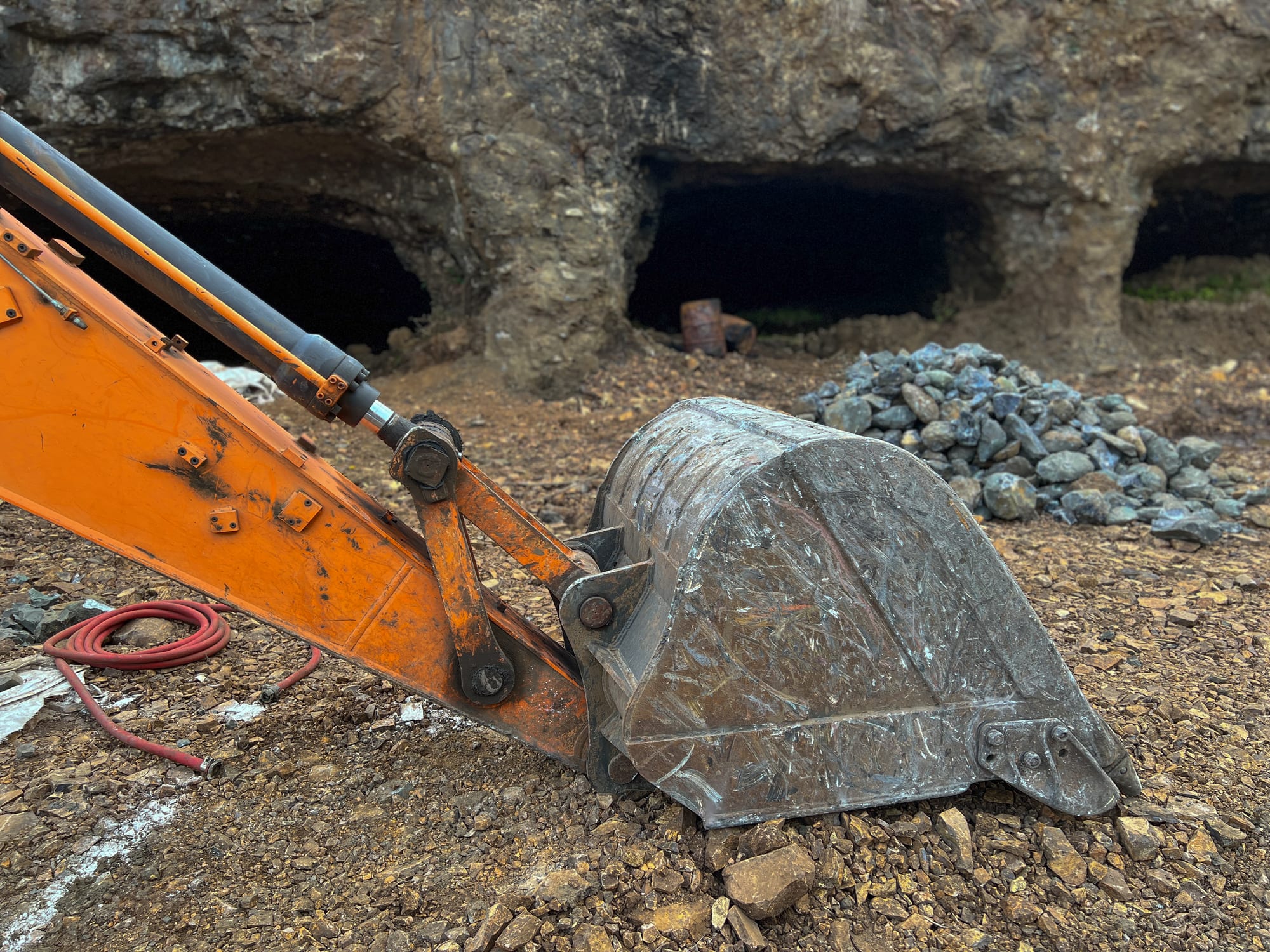
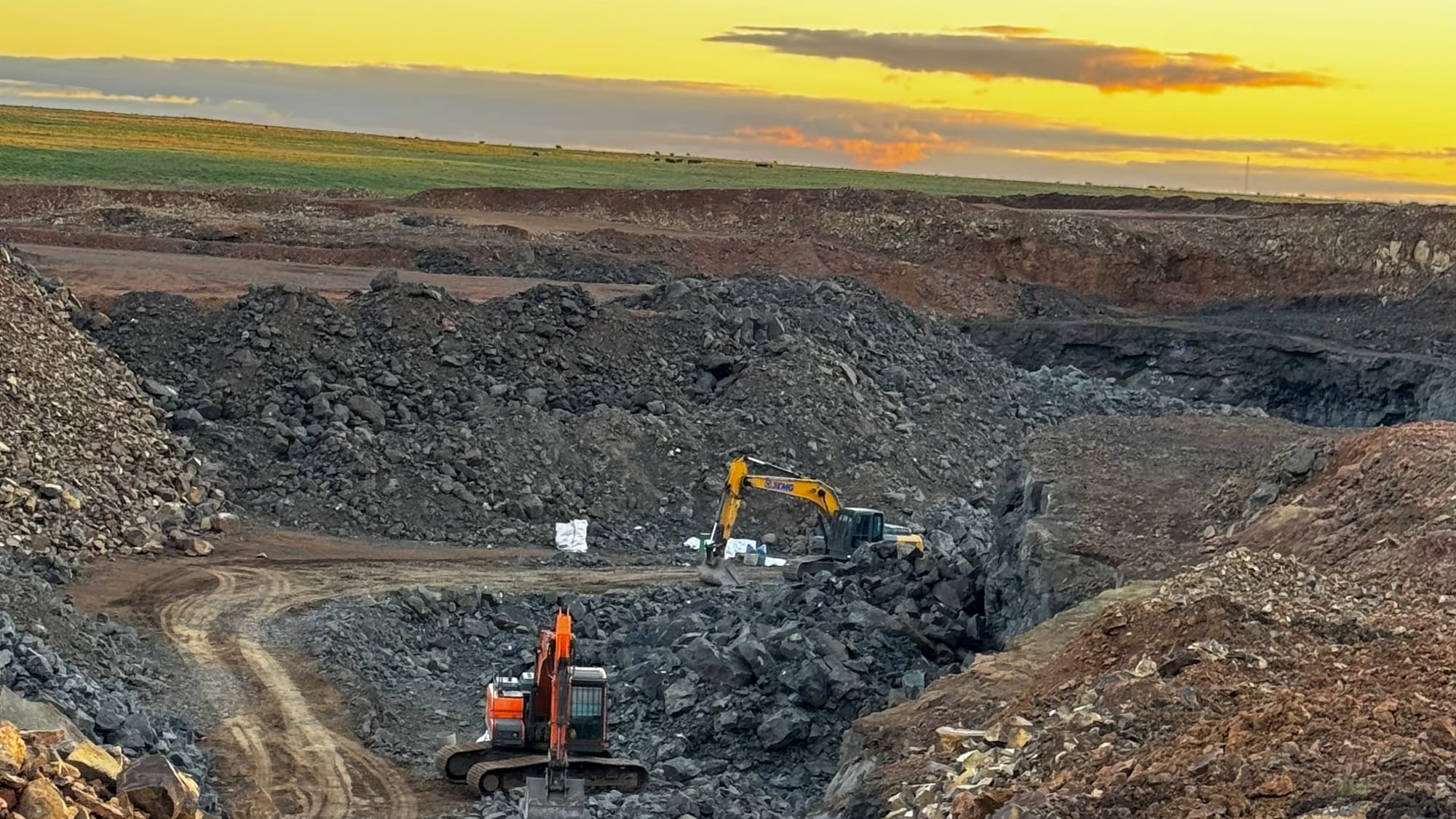
Since August 2026, Le Stage Minerals has extracted amethyst without explosives. The shock wave from a blast can crack a geode from the inside, and what breaks there cannot be repaired. To take geodes out whole, we adapted equipment from the marble industry, and that equipment goes with us to every quarry we open.
Down to the amethyst layer, and within it
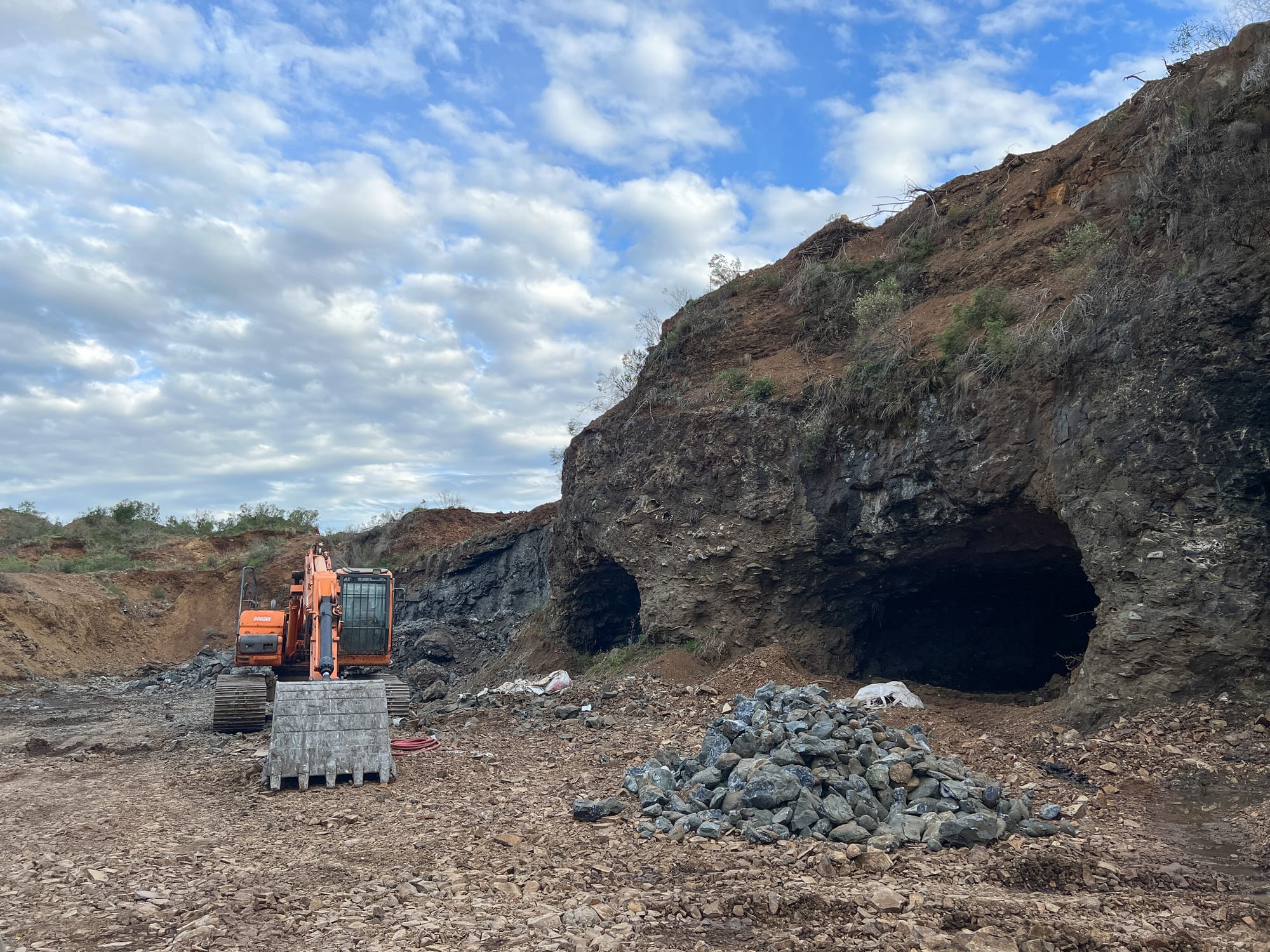
The work starts at the top. A ripper adapted from the marble industry tears up and removes the overburden until it reaches the layer of basalt that holds the amethyst. There, extraction continues without blasting, so the geode comes out whole.
How we got here
19th century
The stone was searched for in creek beds and ditches, where water had left it exposed. Shovel and pry bar.
20th century
The hand miners' pits gave way to quarry faces and, with the first backhoes, to larger production.
1980s
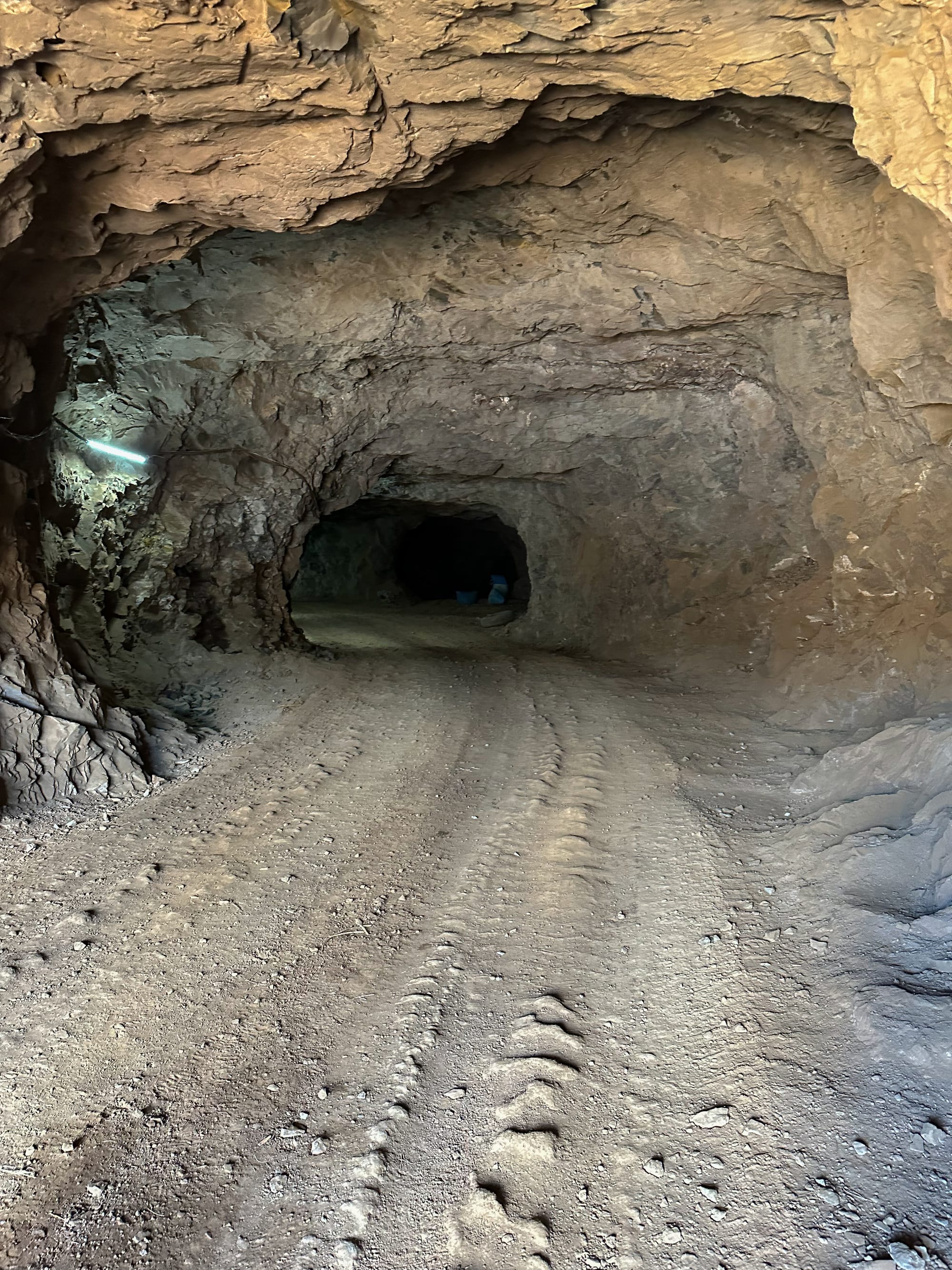
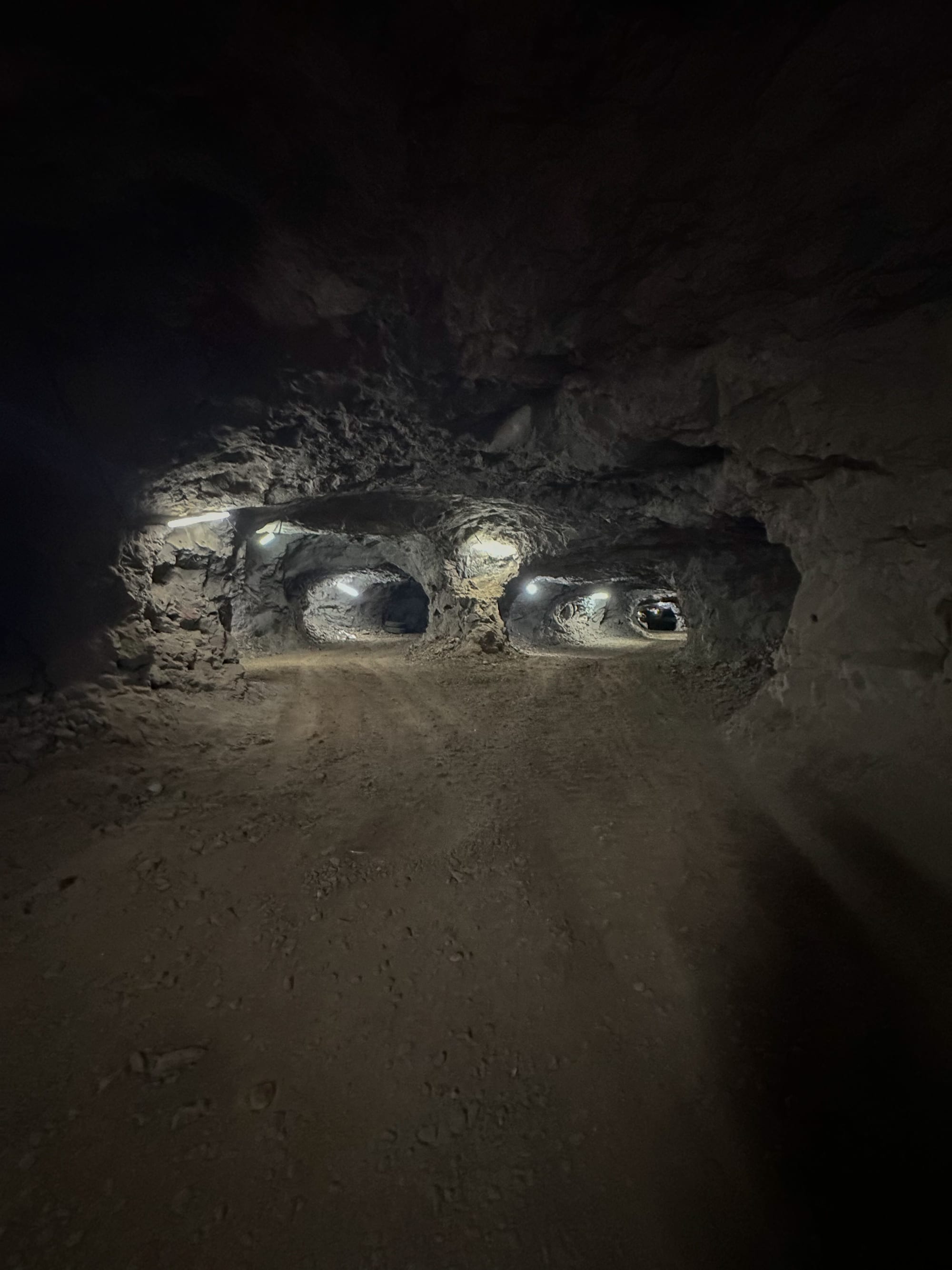
Once miners reached hard rock, extraction took on blasting and tunnels, with techniques brought from Rio Grande do Sul.
August 2026
Le Stage Minerals stops blasting for amethyst.